

Ashorne Hill - Banner 505 Ashorne Hill - Banner 505

BUILDING RESILIENCE

Tackling burnout in the NHS workforce.

The NHS faces unprecedented pressures. Rising demand, staff shortages, and ongoing organisational change have created a landscape where stress and burnout are commonplace. According to the latest NHS Staff Survey, more than one in three staff report work-related stress, and sickness absence, particularly for mental health reasons, remains consistently higher than before the pandemic. In this environment, resilience has never been more critical. But resilience is often misunderstood.

It is too often framed as an individual trait – grit, inner strength, or the ability to “bounce back” – placing the burden squarely on the employee. This perspective risks normalising unsustainable working conditions and pathologising natural human responses to stress. In reality, resilience is not something people have; it is something they do. It is an active process, cultivated through behaviour, practice, and supported environments.

FROM TRAIT TO PRACTICE

Traditional views of resilience emphasise personal toughness. Yet research across occupational psychology, neuroscience, and organisational behaviour shows that resilience is dynamic and context-sensitive. It develops through repeated cycles of manageable stress, followed by reflection and recovery. Social support, psychological safety, and clear organisational structures strongly influence how individuals respond to adversity. Simply put, resilient individuals are often those embedded in resilient systems.


Psychologist George Bonanno has shown that most people display flexible and adaptive behaviours when placed in supportive environments. Resilience does not require heroic effort; it involves recognising what is happening, adjusting behaviour, and seeking connection or help when necessary. This adaptability, sometimes called psychological flexibility, can be learned and strengthened over time, particularly when stress is followed by opportunities for rest, reflection, and social support.


Card background image - Ashorne Hill
RESILIENCE AS RELATIONAL, CULTURAL AND STRUCTURAL

Resilience emerges through more than personal effort. It grows in relationships, culture, and structures.

  • Relational resilience relies on human connection. Strong social networks buffer against burnout and facilitate recovery. When staff feel seen, heard, and valued, they are more likely to adapt effectively to challenges. Studies consistently show that connected teams recover faster and perform better.
  • Cultural resilience depends on what organisations normalise and reward. In teams where open dialogue, vulnerability, and rest are encouraged, staff are more likely to demonstrate adaptive behaviours. Conversely, cultures that equate resilience with silence or self-sacrifice increase burnout risk.
  • Structural resilience is shaped by workload, decision-making autonomy, and role clarity. Poorly designed work systems push individuals toward exhaustion, while well-designed structures enable them to respond thoughtfully rather than react under pressure. The CIPD’s Health and Wellbeing at Work report identifies job design, workload management, and clear roles as key enablers of wellbeing and engagement.
  • This perspective reframes resilience from an individual challenge to a shared, organisational capability. When organisations create supportive systems, model healthy behaviours, and embed recovery and reflection into everyday practice, resilience is no longer an abstract ideal but a tangible, actionable process.


Card background image - Ashorne Hill
IMPLICATIONS FOR THE NHS WORKFORCE

The NHS’s 10-year workforce strategy sets ambitious goals: personalised career coaching for every staff member, expansion of nursing apprenticeships, AI-enabled training, and a shift from international recruitment to cultivating local talent. Alongside these objectives, the NHS has committed to a pressing productivity target of 2% annual improvement. Achieving these ambitions is not simply a matter of recruiting or upskilling staff, it depends on embedding sustainable resilience and wellbeing into everyday work practices.

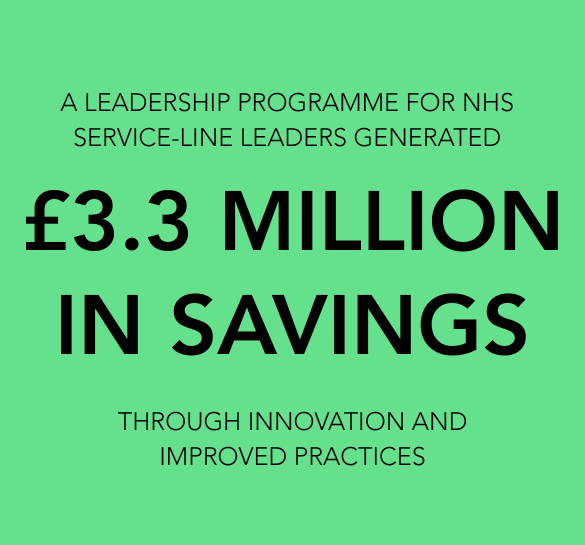
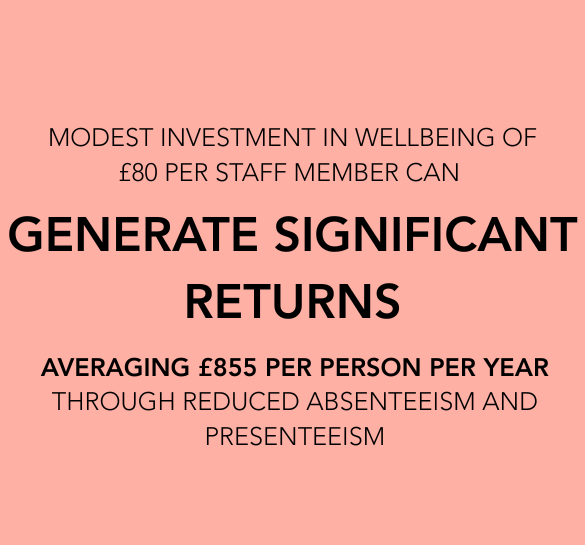
There is strong evidence that investing in staff development delivers tangible impact towards these goals. A leadership programme for NHS service-line leaders generated £3.3 million in savings through innovation and improved practices, while also boosting participants’ confidence, collaboration, and ability to lead change. Similarly, modest investments in wellbeing, even £80 per staff member, can generate significant returns, averaging £855 per person per year through reduced absenteeism and presenteeism.

Card background image - Ashorne Hill

The lesson is clear: resilience grows most effectively when it is a learning priority, reinforced over time, embedded in daily routines, and supported by leaders and teams who model adaptability. Workshops are vital in this process, not as one-off interventions, but as catalysts. They introduce practical tools and frameworks that spark reflection, dialogue, and organisational growth, laying the groundwork for resilience to thrive.

In this way, workforce development becomes a strategic lever, linking staff growth and wellbeing directly to organisational performance. Investing in resilience, communication, and leadership is not just about individual development, it is about equipping NHS teams to adapt, innovate, and thrive under complex pressures.

Card background image - Ashorne Hill
HOW LEARNING AND DEVELOPMENT CAN SUPPORT RESILIENCE

For NHS learning and development (L&D) teams, this requires a shift in focus:

  • From content to practice: Workshops and training sessions should be designed as starting points, with follow-up micro-practices that embed resilience into daily routines. These might include emotional regulation, perspective-shifting, and recovery strategies that staff can integrate into real work contexts.
  • From individual to systemic: Programs should influence team behaviours, leadership practices, and organisational culture, ensuring resilience is a collective asset.
  • From theory to action: Reflection, peer support, and structured recovery routines help staff internalise resilient behaviours. Leadership development should focus on presence, relational skill, and modelling recovery, not simply performance under pressure. By prioritising relational, cultural, and structural elements, NHS organisations can foster resilience that is both sustainable and equitable, reducing burnout and improving patient care.
CONCLUSION

Resilience is not a static trait. It is an active, collective process that emerges through everyday behaviours, supported by culture, relationships, and organisational structures. For the NHS, investing in workforce resilience is not a “nice to have”; it is critical for productivity, staff wellbeing, and the quality of patient care. By rethinking resilience in practice, NHS organisations can shift the focus from individual endurance to supported, sustainable action. Leadership, learning, and organisational design must all work together to make resilience the norm rather than the exception.

At Ashorne Advantage, we help organisations translate these insights into practice. Our programmes act as a catalyst for change, laying the groundwork for resilience to thrive, and positioning workforce development as a strategic lever for better outcomes. Through leadership development, culture-shaping initiatives, and experiential learning, we work with NHS teams to build resilience where it matters most – every day, in real work, with real impact.

REQUEST A CALL BACK...

If you’d prefer to have a chat with a member of our L&D team to find out more, get in touch to arrange a call back.

Card background image - Ashorne Hill
Further Reading and References

NHS Survey Coordination Centre. (2025, March). NHS Staff Survey 2024 – National results briefing. https://www.nhsstaffsurveys.com/results/national-results/.


NHS Transformation Unit. (2025, July 1). NHS sickness absence rates across England. https://transformationunit.nhs.uk/nhs-sickness-absence-rates-across-england/.

Bonanno, G.A. (2021). ‘The Resilience Paradox’, European Journal of Psychotraumatology, 12(1).https://pmc.ncbi.nlm.nih.gov/articles/PMC8253174/.

Chartered Institute of Personnel and Development (CIPD). (2023, September). Health and wellbeing at work. https://www.cipd.org/globalassets/media/knowledge/knowledge-hub/reports/2023-pdfs/8436-health and-wellbeing-report-2023.pdf.

Public Accounts Committee. (2025). NHS Staff Survey 2024 – National results http://briefing.https://publications.parliament.uk/pa/cm5901/cmselect/cmpubacc/350/report.html.

Orme, D. and Campbell, C. (2019). ‘How leadership training saves money: Service line leadership development in the NHS’, BMJ Leader, 3(2), pp. 29–32. doi:10.1136/leader-2018-000132.

British Psychological Society. (2023). Learning from the NHS Staff Mental Health and Wellbeing Hubs report.https://cms.bps.org.uk/sites/default/files/2023-12/BPS%20Learning%20from%20the%20NHS%20 Staff%20Mental%20Health%20and%20Wellbeing%20Hubs%20report.pdf