Ashorne Hill - Banner 505 Ashorne Hill - Banner 505

STRENGTH IN SUPPORT

Tailoring L&D for Inclusivity

Organisations committed to psychological safety and inclusive performance must adapt how they learn and develop people. There are many unique and challenging situations different team members may face including physical disabilities, chronic health conditions, neurodiversity, fluctuating mental-health needs, carers under pressure, and colleagues experiencing life shocks (bereavement, domestic instability, or financial crisis). Effective L&D doesn’t treat this vulnerability as a burden or an HR exception, it weaves inclusive design into everyday learning, line-manager capability, and organisational systems so every employee can grow and contribute safely and with dignity.

WHY TAILORED L&D MATTERS

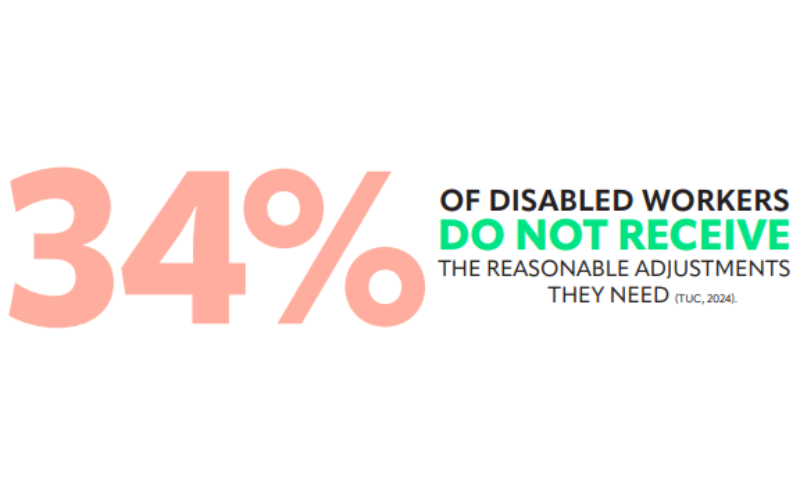
Team members in vulnerable situations often face structural and interpersonal barriers to learning and progression: inaccessible materials, rigid delivery formats, managers who lack confidence to have sensitive conversations, or cultures that penalise disclosure. According to the TUC, 34% of disabled workers reported not receiving the reasonable adjustments they needed, highlighting the real-world impact of these barriers. Left unaddressed, these barriers reduce retention, undermine morale, and erode the talent pipeline. Tailored L&D closes that gap by combining legal and ethical responsibilities (for example, reasonable adjustments for disability) with practical steps that make learning accessible, psychologically safe, and growth-oriented.

Four conditions of effective learning

PRINCIPLES FOR INCLUSIVE L&D DESIGN

1 - START WITH CHOICE AND MULTIPLE PATHWAYS

Offer materials in different formats (micro-learning, transcripts, audio, captions, downloadable slides) and allow people flexibility in how they participate. This reduces cognitive and physical strain and respects different learning preferences.

Card background image - Ashorne Hill

2 - DESIGN FROM THE MARGINS

Build learning that works for people with the greatest needs first, then it works better for everyone. Accessible slide templates, clear navigation for e-learning, and plain-language summaries benefit all learners. Research on neurodiverse employees confirms that line[1]manager training, awareness, and policy adaptations significantly improve inclusion and engagement.

Card background image - Ashorne Hill

3 - EMBED PSYCHOLOGICAL SAFETY

Today, mirror neurons are still doing the heavy lifting when we read a room, mirror a colleague’s tone, or learn by watching someone lead under pressure. It’s how we develop judgement, emotional intelligence and interpersonal skill, not by reading about it, but by seeing it done well.

In other words, your brain is built to learn by watching other people. Even if they don’t know you’re watching. (Within reason.)

Card background image - Ashorne Hill

4 - EQUIP LINE MANAGERS

Managers are the interface for most adjustments and the key to whether learning translates to practice. Provide managers with practical toolkits on reasonable adjustments, sensitive conversations, spotting signs of need, and following up after learning is applied. Leadership research highlights that manager capability is crucial for creating inclusive, supportive workplaces.

Card background image - Ashorne Hill

5 - MAKE ADJUSTMENTS STANDARD, VISIBLE, AND SIMPLE TO REQUEST

Normalise reasonable adjustments in induction and learning sign-ups. Include an “adjustments/ preferences” field on training bookings and clear processes so team members know what to expect and how to ask.

Card background image - Ashorne Hill
TACTICAL L&D INTERVENTIONS THAT WORK

At Ashorne Hill, we design learning interventions that are practical, flexible, and grounded in evidence. Key approaches include:

  • EQ AND DEI WORKSHOPS – PRACTISED FOR IMPACT Emotional intelligence and DEI training focused on self-awareness, empathetic listening, and adaptive communication helps managers respond to vulnerability without overstepping. Role plays, real-world scenarios, and action planning give leaders concrete steps they can apply immediately.
  • MICRO-PRACTICES AND BLENDED LEARNING We combine immersive sessions with shorter modules and micro-practices that learners can engage with around their energy levels and workloads. This blended approach supports deeper learning while enabling individuals with fluctuating conditions to maintain momentum and confidence.
  • CO-DESIGN WITH LIVED EXPERIENCE Partnering with team members who bring first-hand insight into vulnerability ensures learning content resonates deeply, highlights blind spots, and builds trust.
  • MANAGER COACHING AND REFLECTIVE TOOLS Guided coaching and structured conversation frameworks help managers navigate sensitive situations with empathy and confidence. These tools embed inclusive leadership behaviours and strengthen emotional intelligence in everyday practice.
  • SAFE DISCLOSURE PATHWAYS AND PEER SUPPORT We support organisations in creating confidential channels for adjustments and optional peer support networks. Learning programmes include guidance on setting up and running these safely, reinforcing psychological safety and trust.


PRACTICAL NEXT STEPS

Organisations can translate these interventions into tangible action with Ashorne Hill’s support. Key steps include:

REVIEW YOUR LEARNING LANDSCAPE – Conduct a light-touch audit of current programmes to identify accessibility gaps, quick wins, and areas for improvement.

PRIORITISE MANAGER CAPABILITY – Pilot workshops and embed follow-up coaching to ensure learning translates into daily leadership practice

CO-CREATE WITH LIVED EXPERIENCE – Involve employees with first-hand experience of vulnerability to inform and validate learning content.

INTEGRATE INCLUSIVE PROCESSES – Ensure learning adjustments are visible, easy to request, and linked to HR systems, creating a seamless experience for all team members.

MEASURE IMPACT MEANINGFULLY – Track uptake of adjustments, manager confidence, participant feedback, and evidence of behaviour change to create a continuous improvement loop that keeps inclusion at the heart of development. By combining tailored learning design with these actionable steps, organisations can embed inclusive practice sustainably and ensure all team members can thrive.


CONCLUSION

Supporting diverse needs in the workplace is central to creating resilient organisations where talent can flourish. L&D has a unique role; it shapes the skills, norms, and systems that make inclusive practice sustainable. By designing learning that is flexible, co-produced, manager-led, and grounded in relevant guidance, organisations can ensure that vulnerability becomes a cue for care and development rather than a barrier to opportunity. Ashorne Hill’s ‘Leading with EQ’, ‘Empowering Inclusivity’ and ‘Cultural Fluency’ workshops provide a practical platform to embed these changes, turning policy into everyday, compassionate practice that benefits individuals and the whole organisation.


Card background image - Ashorne Hill

Transform inclusion into action. Partner with Ashorne Hill to equip your leaders and teams with the tools, skills, and frameworks to support diverse needs and build resilient, high-performing cultures.

REQUEST A CALL BACK...

If you’d prefer to have a chat with a member of our L&D team to find out more, get in touch to arrange a call back.

Marketing Opt-In
Card background image - Ashorne Hill
Further Reading and References

Trade Union Congress (TUC), 2024, Disabled Workers’ Access to Reasonable Adjustment https://www.tuc.org.uk/research-analysis/reports/disabled-workers-access-reasonable-adjustment.

Scoping Review, 2022, Organisational Policies and Practices for the Inclusion of Vulnerable Workers,

Journal of Occupational Rehabilitation https://www.researchgate.net/publication/363416937_Organisational_Policies_and_Practices_for_ the_Inclusion_of_Vulnerable_Workers_A_Scoping_Review_of_the_Employer’s_Perspective.

Heriot-Watt University, 2024, Creating Inclusive Workplaces: Improving Environments for Neurodiverse Employees,https://www.hw.ac.uk/research-enterprise/research/research-environment/our-impact/social inclusion-and-equality/improving-the-workplace-for-neurodiverse.

O’Donovan, R. & McAuliffe, E., 2020, A Systematic Review Exploring the Content and Outcomes of Interventions to Improve Psychological Safety, Speaking Up and Voice Behaviour, BMC Health Services Research,https://www.researchgate.net/publication/339152891_A_systematic_review_exploring_the_content_and_outcomes_of_interventions_to_improve_psychological_safety_speaking_up_and_voice_behaviour.

Boston Consulting Group (BCG), 2024, Psychological Safety Levels the Playing Field for Employees,https://www.bcg.com/publications/2024/psychological-safety-levels-playing-field-for-employees.

Kersten, A., 2024, Employers Crucial for Inclusion of Vulnerable Groups in the Labour Market, Tilburg University,https://www.tilburguniversity.edu/current/press-releases/research-employers-crucial-inclusion vulnerable-groups-labor-market.